Showing posts with label XiAn. Show all posts

Wednesday, June 29, 2011

FUNCTION_Strategy_04


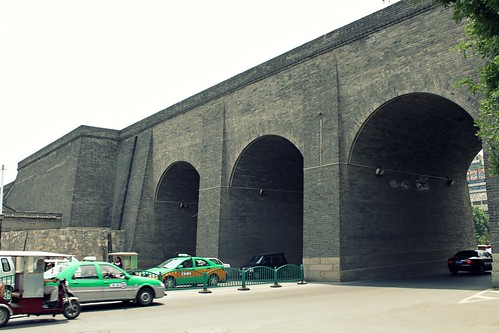
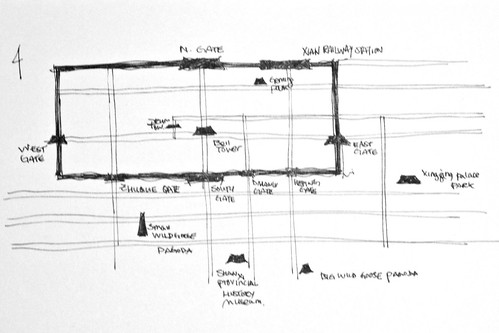
Xi'an City Gate Wall

Xi'an is an ancient city whose ancient defensive city walls have been renovated throughout the history. Based on the original of Tang Dynasty 7th and 11th century, it was heavily restored during the Ming Dynasty, Qing Dynasty, and then around 1983 by the people's government. Some of the more significant changes that have been made to the ancient walls are reconstruction of the destroyed East gate and the addition of the Zhalou Tower. During the Ming Dynasty, the city was extended about a quarter size toward both East and North sides to become the current size. Especially significant is the additional gates that were added to the existing single opening at the four cardinal gates.


Monday, June 27, 2011

Spectacular Reinforcement

Performance in architecture frequently involves the use of spectacle as a means of drawing attention to itself. Similar to the attraction of nocturnal insects to sources of light, the use of spectacles produces a rhythmic, predictable cycle that integrates the landmark or site into the routine and conscious of the end-user. This imparts a social use and significance to the cultural landmark, which under ordinary circumstances, would likely function strictly as a touristic object.

The Wild Goose Pagoda in XiAn offers a comprehensive example of such performances. The pagoda experiences, during low season, sparce attendance at best. However, at night, the great park that lies just north of it erupts in an elaborate fountain show that involves the use of 1124 frequency converters, 3300 colored lamps, and 2000 nozzles in total. It is during this daily event that the pagoda experiences its greatest volume of visitors, most of which are local residents, which establishes this fountain show as not just an isolated spectacle for tourists, but also a regular feature in the lives of the denizens of XiAn, and an essential diurnal episode in the life of the city. It keeps the pagoda constanly in the vision of the city and its inhabitants, aiding to prevent the Tang Dynasty monument from ostracization.